Article: Bow Hoist Rope Guide: What to Look for in a Treestand or Saddle Setup
Bow Hoist Rope Guide: What to Look for in a Treestand or Saddle Setup
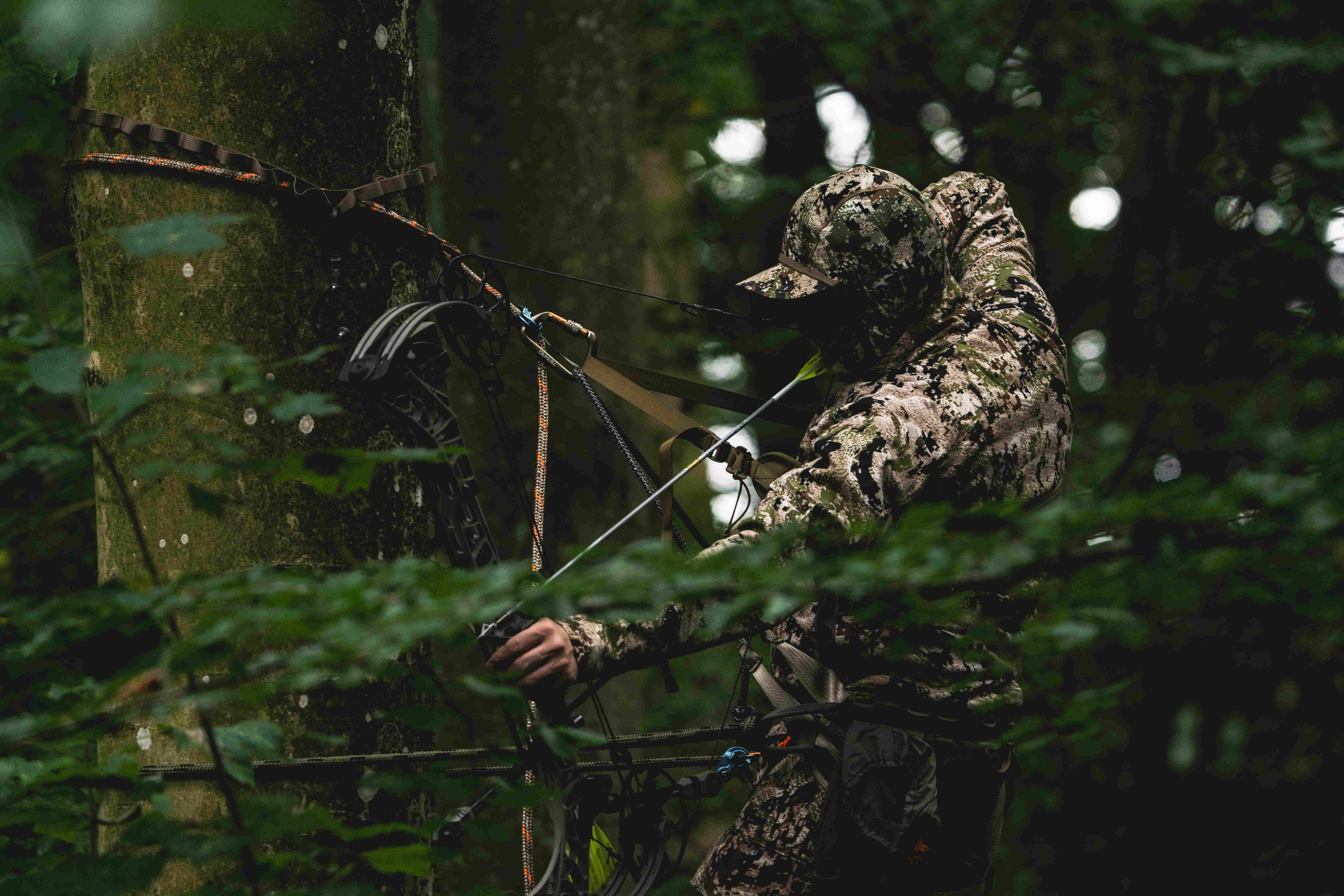
A bow hoist rope often feels like an afterthought, but it becomes critical the moment you are high in the tree, secure, and need to bring your bow or pack up without creating a scene. A well-chosen rope keeps the hoist process smooth, helps you stay organized, and makes the entire tree setup feel more deliberate. Whether you hunt from a hang-on treestand or a mobile saddle, the core goal is identical: get your gear into position cleanly and quietly without risking a tangle or a loud, clumsy ascent.
Key takeaways
- Choose a hoist rope based on durability, tangle resistance, and ease of use in cold or damp conditions.
- A dedicated pull-up rope helps you keep your hands free during the climb, which is safer and more efficient.
- The best hoist setup integrates seamlessly with your existing pack or bow, preventing snags during the lift.
- For mobile saddle hunting, focus on a compact rope design that packs away easily without absorbing excessive moisture.
- A simple hanger used in combination with your hoist rope creates a much more organized hunting workspace.
Why a reliable bow hoist rope matters
Many hunters obsess over the choice of stand, saddle, sticks, or climbing platform but leave gear management to chance. In the field, gear control is just as important as the stand itself. Once you are off the ground, a reliable rope is the tool that transitions you from "climber" to "hunter."
If your hoist rope tangles, snags on branches during the lift, or requires two hands just to operate, it effectively becomes a distraction. By the time you get your bow positioned and secure, you may have already missed a crucial shot window or made more noise than necessary. A proper hoist rope helps you bring up items efficiently after you are secured, creating a smoother transition that lets you start the hunt in a calm, prepared state.
Evaluating materials: what really works in the woods
You can find endless options for ropes, but few are designed specifically for the unique demands of elevated hunting. When selecting your hoist rope, look for these traits:
- Durability: The rope should withstand constant friction against bark, branches, and metal edges without fraying.
- Tangle Resistance: A rope that knots up in your pocket or pack is a liability. Look for materials that maintain their shape and do not develop "memory" that forces them to twist.
- Weight and Bulk: For mobile hunters, ounces add up. A rope that is lightweight but robust is significantly better than a thick, heavy-duty utility rope that takes up space.
- Moisture Management: In an EU climate, ropes that absorb heavy water and freeze are a nightmare. Synthetic materials that shed water are generally superior to cotton or organic fibers.
Dedicated hunting products like the Custom AmSteel Pull Up/Pull Down Rope (Orange) and the Black version are designed to be thin, strong, and highly resistant to tangling, making them far more practical than standard rope from a hardware store.
Comparing treestand and saddle setups
Your hoist routine should evolve to match your specific hunting style. Treestand hunters often have a more fixed, repetitive setup. You can leave your hoist rope clipped to the stand or a specific branch, making the routine identical on every trip.
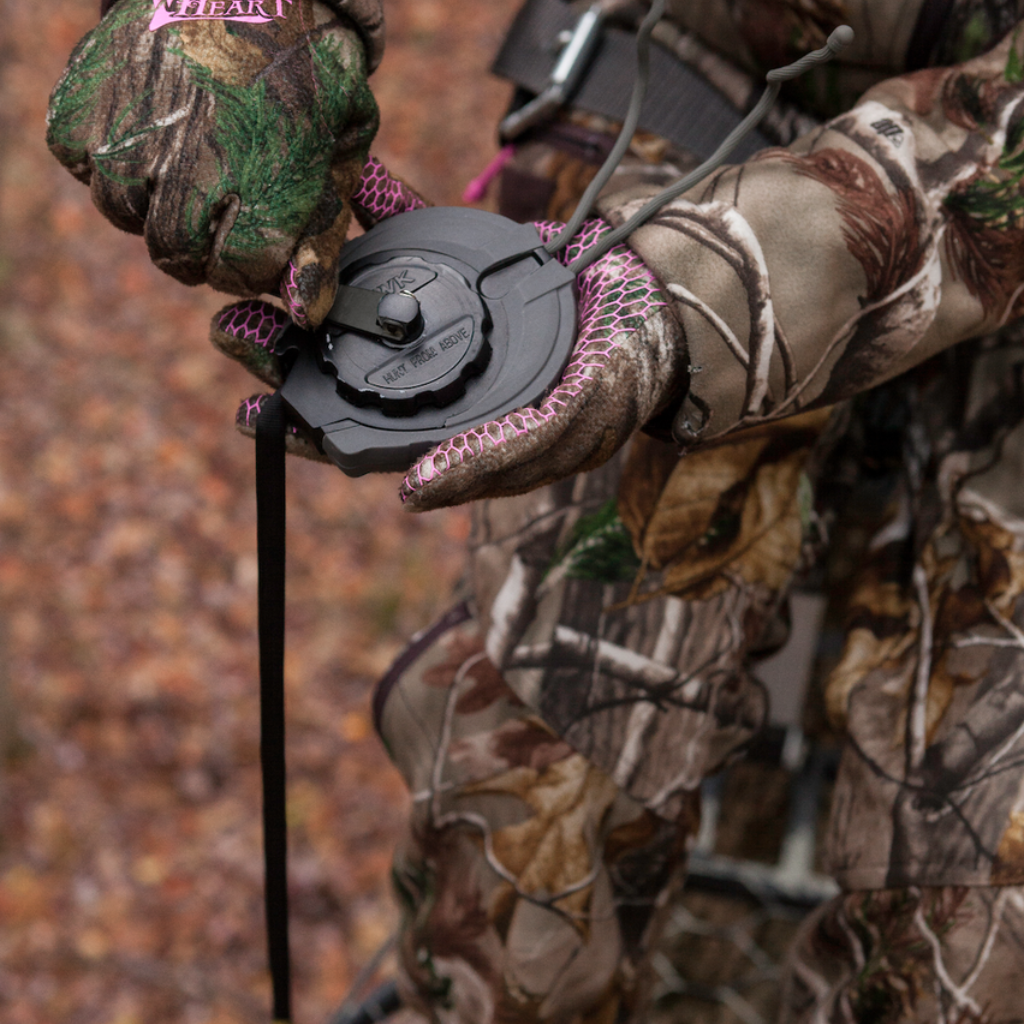
Saddle hunters, by contrast, usually operate on a mobile basis. You are moving to different trees and different environments. In this case, your hoist rope needs to be ultra-compact, easily accessible from the pack, and simple to deploy from the ground. A specialized tool like the Doyle Huntin' Hoist Cord can offer a more integrated, controlled retrieval experience that many mobile hunters prefer because it keeps the cord contained rather than loose.
Ultimately, the "best" rope depends on how much you move. If you carry a minimalist setup, prioritize the lightest and most packable rope available.
Technique: hoisting without the noise
Even the best rope can be noisy if you use it incorrectly. Hoisting gear is essentially moving a heavy object vertically against a tree trunk. If you let the gear swing, rub against the bark, or bang against your climbing sticks, you lose the element of stealth.
- Control the ascent: Use a two-handed approach. Let the rope pass through your hands to control the speed of the lift. Do not simply tug and release.
- Keep it away from the trunk: If possible, lift the gear slightly away from the tree surface to avoid the scraping noise of fabric against rough bark.
- Pre-pack the gear: Make sure your pack is cinched tight and your bow quiver is secure. A dangling zipper pull, a loose strap, or a quiver rattling against the tree will make noise no matter how good your rope is.
- Watch your timing: Hoist when the wind allows or when movement in the woods naturally masks small sounds.
Organizing the tree with a hanger
Once the rope has done its job and your gear is at height, the next challenge is managing it. Leaving your pack on the ground or dangling from a branch is rarely the best strategy. It creates unnecessary movement when you need to access supplies.
A bow hanger or gear hook can make your setup much cleaner. For example, the Custom AmSteel Tether Bow Hanger (TBH) allows you to get the bow off your back and onto the tree without needing a large, heavy steel arm. It transforms the tree into a small workstation, letting you access your gear without having to fumble around in the dark.
Integrating the hanger into your hoist sequence creates a predictable loop: hoist gear, secure the hanger, hang the gear, and start hunting.
Maintenance and long-term care
Your hoist rope will eventually get dirty, wet, and potentially snarled. At the end of the season, do not just toss it back into your pack. Rinse it in cold water to remove forest debris, check for any abrasions or frayed sections, and coil it neatly. If you find a knot that refuses to come out, replace the rope; the risk of a knot jamming at the wrong time is not worth a small replacement cost.
Keep the rope in a dedicated pocket in your pack. Knowing exactly where it is prevents the "searching" behavior that causes extra noise and movement when you should be settling in.
Field reliability: when should you replace your rope?
Check your hoist rope periodically during the season, especially if you hunt in brushy or thorny areas. Any sign of thinning, fraying, or stiff sections indicates internal damage. AmSteel and similar high-strength synthetics are incredibly durable, but they are not invincible. If your rope has been snagged or stretched repeatedly, consider a fresh piece of cord before your next trip.
Reliable gear is reliable because you check it, not because it never fails. A hoist rope is a low-cost, high-value insurance policy against field frustration.
Conclusion
The bow hoist rope is a simple tool, but it is one that you will interact with on every single hunt. Choosing a rope that handles well, resists tangles, and integrates with your climbing system makes the start of every session smoother. Whether you look at our Hoists & Ropes Collection or our broader Hoists & Hangers Collection, the goal is always to find the tool that fits your routine without adding extra complexity.
Stay simple, stay organized, and let your gear support your movement rather than hindering it.
FAQ
Do I need a bow hoist rope for saddle hunting?
Most mobile hunters strongly prefer using one. Bringing your bow or pack up only after you are tethered and secure makes the setup significantly safer and more controlled than trying to carry everything during the climb.
Is a pull-up rope different from a hoist-style product?
They solve the same problem, but with different approaches. A pull-up rope is usually a dedicated cord meant for lifting, while some hoist products offer an integrated reel system to manage the cord length automatically. Both are effective, but the pull-up rope is often lighter and simpler for minimalist setups.
Should I add a hanger as well?
A hanger is almost always a useful addition. Once your gear is at height, having a secure place to hang the bow and pack immediately transforms the tree into a much more organized and quiet hunting workspace.
How do I stop my rope from tangling?
Select high-quality synthetic cord like AmSteel, which has less "memory" and is less prone to kinking than standard hardware store rope. Also, avoid stuffing it randomly into a pack; coiling or using a dedicated small pouch will keep it ready for the next climb.
How much rope length is enough?
For most hunting scenarios, 30 to 40 feet is sufficient to reach the height of a standard treestand or saddle setup. Longer ropes add unnecessary weight and increase the risk of tangling in your pack.