

How to Organize Gear on a Saddle Hunting Tree Without Turning It Into a Junkyard
Saddle hunting is supposed to feel mobile, efficient, and controlled. In real life, plenty of tree setups end up looking more like a garage shelf tied to bark. The bow is hanging somewhere half-right, the pack is in the way, one accessory keeps swinging, and the hunter is trying to act as if all of this was planned. If you want a quieter and more useful setup, tree organization matters much more than most hunters admit.
A clean setup is not about adding random gadgets. It is about giving the gear you actually use a clear place to live. That usually means a reliable bow hook or bow holder, one main hanging point for support gear, and a repeatable structure you can set in the dark without having to invent the system again on every hunt.
Key takeaways
- A better tree setup is not about adding more hardware. It is about giving the gear you actually use a fixed and repeatable place.
- A good bow hook and one or two smart hanger pieces usually improve the setup more than a pile of extra accessories.
- Organization reduces wasted movement, and wasted movement often matters as much as noise.
- Your setup should feel easy to use in the dark, in the cold, and when you are already slightly annoyed.
- If the tree starts looking like a junkyard, the answer is usually fewer loose decisions and more system thinking.
Why tree organization matters more than people think
Bad tree organization creates three problems at the same time: more noise, more wasted movement, and more hesitation. That hesitation matters. If you need to look around and wonder where your release, bow, or rangefinder ended up, the setup is already costing you focus at the worst possible moment.
A cleaner tree setup usually feels better because it turns several tiny decisions into one repeatable system. That is one reason experienced mobile hunters often look calmer in the tree. It is not only skill. It is also that the gear is where it is supposed to be.
This matters in both saddle hunting and hang-and-hunt style mobile setups, but saddle hunters feel the problem fast because they tend to work with limited space around the tree. When every item is close to your body and close to the trunk, poor positioning becomes obvious immediately.
If you are still building your general setup, it helps to read Beginner Saddle Hunting Setup Guide together with this article. A lot of organization problems start earlier than hunters think, usually when the full system has never been planned as one complete working setup.

Start with three simple gear zones
If your tree setup feels messy, the easiest fix is to think in zones instead of individual items. Most saddle setups become much easier to manage when you split the gear into three simple groups:
- Immediate-use zone: bow, release, rangefinder, and anything you may need fast.
- Support zone: backpack, calls, water, snacks, gloves, and the things you may need but not every minute.
- Dead-still zone: spare layers, backup items, or gear that should stay parked unless conditions change.
That structure sounds simple because it is simple. But simple wins here. If every item is fighting for the same spot on the tree, the setup becomes noisier and more annoying than it has to be.
The immediate-use zone should be the easiest one to access with the least body movement. In practice, that means your bow and the items that help you get ready for a shot should sit where your hands naturally go. The support zone can be a little farther away, but not so far that you need to do a full-body shuffle to reach it. The dead-still zone is for items that should not tempt you into unnecessary movement.
Most hunters who struggle with tree organization do not actually have too little space. They have too many undefined zones. Once you define the zones, the setup becomes easier to repeat and easier to trust.
Relevant products:

The bow should never be the problem item
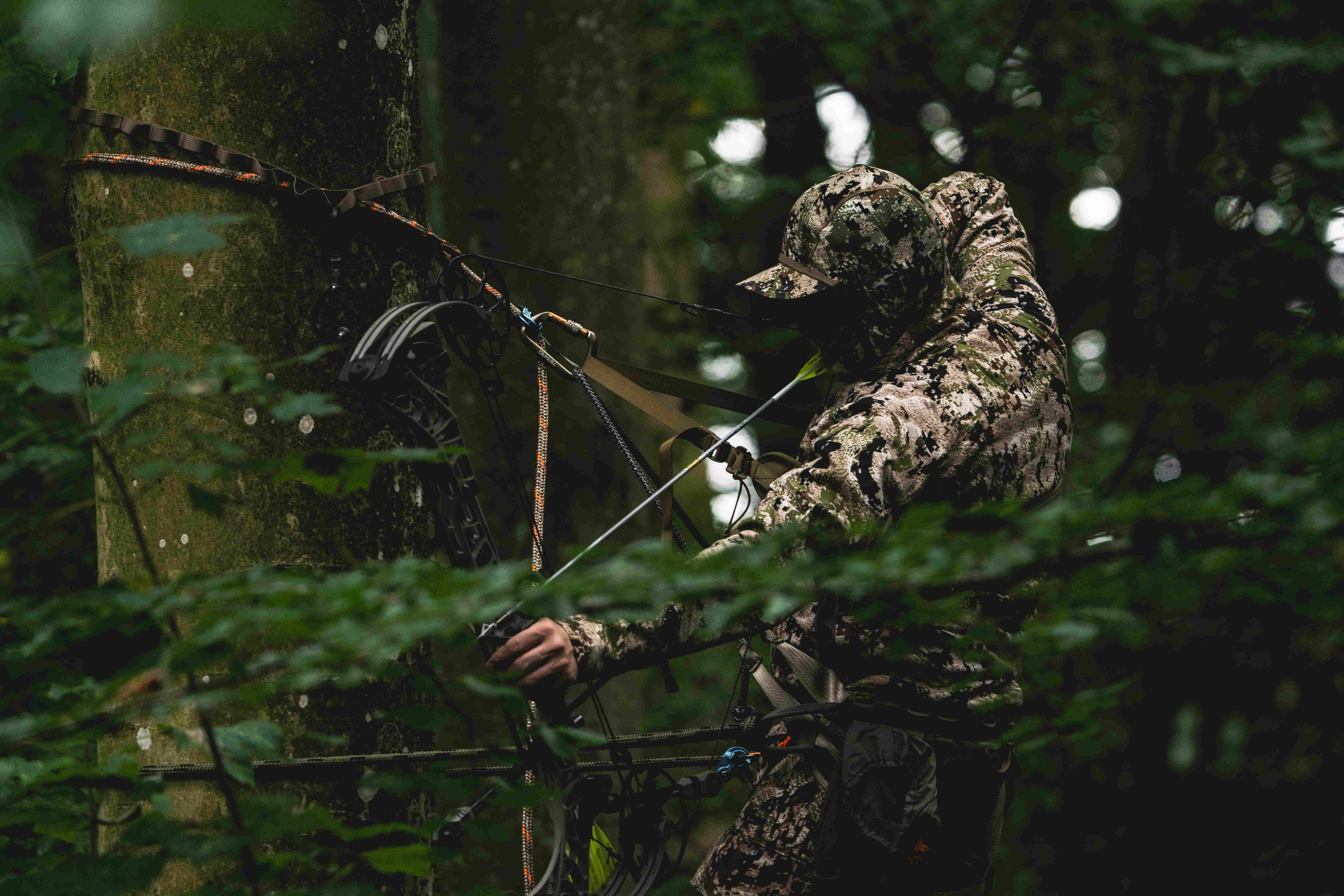
If there is one piece of gear that should never feel awkward in the tree, it is the bow. It should not be balanced badly, hanging somewhere half-right, or placed where it forces you into extra movement. That usually means using a bow hook or bow holder you can trust instead of improvising every hunt.
A hook that feels intuitive will make the whole setup feel cleaner. A bow holder that feels stable can remove one of the biggest sources of fiddling in the tree. Small difference on paper. Big difference at the wrong moment.
The main test is simple: can you hang the bow quietly, reach it naturally, and return it without the setup feeling clumsy? If not, the problem is probably not your bow. It is your organization.
For hunters who want a compact and simple access point, a dedicated bow hook can be enough. For hunters who want more obvious support and a clear place for the bow to stay parked, a bow holder may feel more reassuring. The right answer depends on the style of setup, the tree shape, and how much structure you want when settling in.
Relevant products:

Where should the backpack go?
The pack is often the item that turns a clean setup into a messy one. It is bulky, it can swing, and it usually contains both support items and dead-still items. That means you should not treat it as part of the immediate-use zone unless you have a very specific reason.
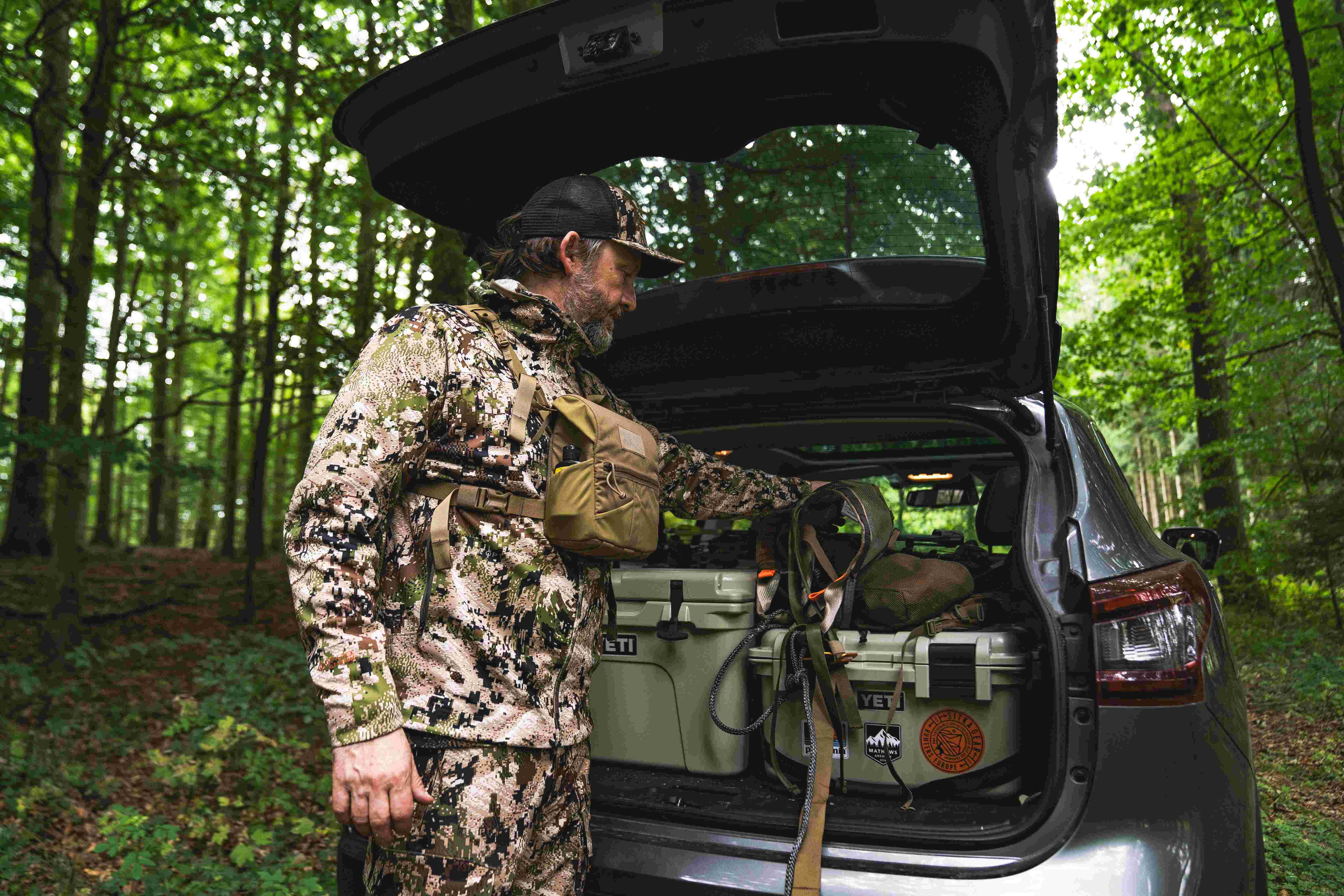
In most cases, the pack should sit slightly outside your main working space so it stays available without interfering with the bow or your shooting-side movement. The exact position depends on the tree and the hunter, but the principle stays the same: the pack should be reachable, not central.
If your pack keeps becoming the dominant object on the tree, that usually means one of two things. Either the pack is overfilled for the hunt, or too many frequently used items are still living inside it. A cleaner setup often comes from pulling out the few essential items that matter most in the tree and giving them their own stable positions.
If packs are still a weak point in your full system, it is worth cross-checking your setup against What Should You Look For in a Pack for Longer Bowhunting Trips or the broader backpack guides already in the content cluster.
How to avoid the classic saddle-tree junkyard look
Most messy setups happen because each item gets decided one at a time in the field. One thing goes here, one thing goes there, and after five minutes the tree looks like it is running a yard sale. The better approach is to decide the system before the hunt starts.
Ask three questions:
- Where does the bow live?
- Where does the pack live?
- Which items must stay closest to my hands?
Once those three answers are stable, most of the setup noise disappears with them.
The wrong way to solve clutter is to keep buying more attachment points. The right way is to reduce decisions. When the system is already decided before your boots leave the ground, you stop making random placement choices while hanging on the tree.
This is also where the broader logic from What Is Silencing Tape Used For and Silencing and Organizing Your Tree Setup becomes practical. Noise control and organization are not separate topics. A messy setup is usually a noisy setup waiting for the wrong moment.

What products actually make this easier
There are plenty of accessories in mobile hunting, but not all of them genuinely improve the setup. For this specific problem, the useful categories are clear:
- Bow hook / bow holder: to keep the bow stable and ready.
- Primary gear hanger: to give the setup a central organization point.
- Secondary support hanger: only if it solves a real access problem.
That is why products like the QuickDraw Bow Hook, Fold n Go Gear Hanger, HYS Strap Gear Hanger, and HME Bow Holder make sense in this topic. They solve real tree-setup problems without forcing you into clutter for the sake of clutter.
The more useful way to compare them is by job:
- QuickDraw Bow Hook: makes sense when the priority is giving the bow a quick, repeatable home.
- Fold n Go Gear Hanger: makes sense when you want one main tree-based organization point for several support items.
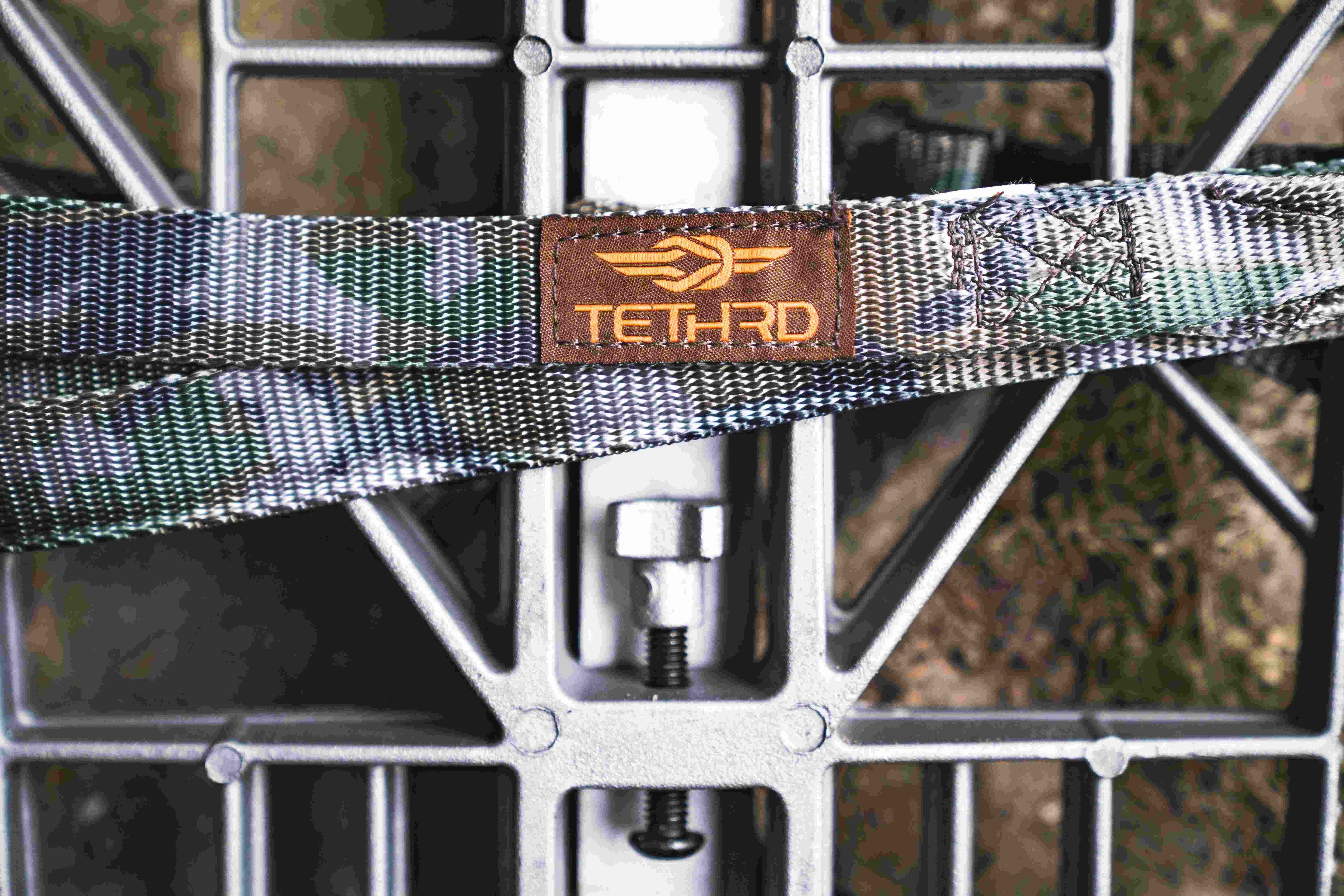
- HYS Strap Gear Hanger: makes sense when a strap-based hanger fits the way you want to distribute gear around the trunk.
- HME Universally Mountable Bow Holder: makes sense when the hunter wants more obvious bow support rather than a simpler hanging point.
That kind of job-based thinking is better than pretending all gear organizers solve the same problem. They do not. Some products are mainly about bow placement. Some are mainly about support gear. Some are useful because they keep the tree cleaner without adding much complexity.
Relevant products:
Set up for dark, cold, and annoyance
A tree setup should not only work when you are fresh, comfortable, and standing in your garage. It should work when it is dark, your fingers are colder than expected, and you are already dealing with one small irritation. That is the real test.
If a placement idea only works when you are calm and fully awake, it is probably not a good field system. Real organization should survive bad timing and low patience. Your main items should still be easy to find by feel. Your bow should still return to the same position. Your support gear should still stay out of the way.
One good rule is this: if an item needs visual confirmation every time you touch it, its placement is probably not ideal. Better setups become familiar enough that your hands know where things are without your eyes having to check every detail.
Common mistakes that create clutter fast
- Too many hanging points: more hooks can create more confusion instead of more control.
- No defined bow position: the bow keeps moving because it never had a real home.
- Pack placed in the main work area: a big object ends up competing with important access space.
- Frequently used items left inside the pack: this forces extra movement every time you need something small.
- Every hunt starts from zero: the system changes each time, so the tree never becomes familiar.
Most of these problems do not need a dramatic fix. They need one honest reset. Decide the bow position first, choose one main hanger solution, move the pack out of the core zone, and stop treating every accessory like it deserves prime tree space.
Funny truth: if you need five seconds to remember where something is, the setup is already wrong
This is the practical test. If you have to pause and think, "Wait, where did I put that?" then the setup is not ready. That may sound harsh, but it is useful. Tree organization is not meant to be decorative. It is meant to remove tiny moments of confusion before they become lost chances.
The best setup is usually the one that feels slightly boring because it works the same way every time. That is what you want. Boring is good when the animal is moving and your brain is trying not to become soup.
The practical answer
If you want to organize gear on a saddle hunting tree properly, start with the bow, give the setup a clear hanger structure, and use zones instead of random attachment decisions. A cleaner system makes you quieter, calmer, and more efficient in the tree.
And most importantly: if your saddle tree looks like a junkyard, the answer is usually not more gear. It is better organization.
FAQ
What is the most important item for organizing a saddle hunting tree?
Usually a reliable bow hook or bow holder, because the bow is one of the most important items to keep stable and easy to reach. Once the bow has a proper place, the rest of the setup becomes easier to structure.
Do I need more than one gear hanger?
Not always. Many setups improve most from one strong primary hanger and one clear gear plan rather than more attachments. Extra hardware only helps when it solves a real access problem.
How do I know if my tree setup is too cluttered?
If you have to search for items, move extra gear to reach the bow, or keep re-adjusting positions during the sit, the setup is already too cluttered.
Should my backpack hang right next to me?
Usually not in the middle of your main working space. It should be reachable, but it should not interfere with the bow, your body position, or the movement you need for a shot.
Is the quietest setup always the one with the fewest accessories?
Not automatically, but fewer random accessories often help. The real goal is not minimalism for its own sake. It is using only the hardware that gives the setup a clear and repeatable structure.


